
What does humidity do to a roof?
Humidity adds moisture to the air, and that moisture can affect roofing materials even when there is no rain or visible leak. Over time, repeated damp conditions may contribute to mold growth, wood decay, fastener corrosion, insulation problems, and reduced performance of roofing components.
In East Rochester, NY, roofs experience a wide range of moisture conditions. Warm, humid summer air can be followed by cool nights, autumn rain, winter snow, and spring thawing. These repeated changes give roof materials many opportunities to absorb, release, freeze, and reabsorb moisture.
Humidity alone does not usually destroy a properly designed roof. Problems become more likely when humid air combines with poor attic ventilation, inadequate insulation, blocked drainage, damaged flashing, or materials that remain wet for long periods.
How does humid air reach roofing materials?
Moisture can reach a roof in several ways. Outdoor humidity may enter through roof vents, gaps, damaged shingles, or exposed edges. Indoor moisture can also move upward from the living space through the attic.
Common indoor sources include:
- Showers and baths
- Cooking and dishwashing
- Clothes dryers that vent improperly
- Damp basements or crawl spaces
- Houseplants and routine household activity
- Unvented fuel-burning appliances
Warm indoor air naturally rises. If it reaches a cold roof deck or the underside of roof sheathing, water vapor may condense into liquid water. This process is similar to moisture forming on a cold beverage container.
That condensation can occur without a roof leak. A homeowner may see dark stains, damp insulation, rusty nails, or frost on the underside of roof sheathing and assume rainwater is entering. In some cases, the source is indoor air escaping into the attic.
Why is attic ventilation important?
Attic ventilation helps remove excess heat and moisture from the space below the roof. A balanced system generally uses low intake ventilation near the eaves and higher exhaust ventilation near the roof peak or upper roof area.
Ventilation cannot correct every moisture problem. It works best when combined with a continuous air barrier and adequate insulation between the living area and the attic. If warm, moist household air is leaking through ceiling penetrations, ventilation may only reduce the symptoms rather than solve the source.
Common air-leak locations include:
- Recessed light fixtures not rated for contact with insulation
- Attic hatches that do not seal tightly
- Plumbing and electrical penetrations
- Gaps around chimneys and flues
- Bathroom fans that discharge into the attic instead of outdoors
Roof vents should not be blocked by insulation. At the same time, adding more vents without providing proper intake airflow can create an unbalanced system.
How are asphalt shingles affected?
Asphalt shingles are designed to withstand rain, snow, sunlight, and ordinary seasonal humidity. Persistent moisture can still shorten their useful life by affecting the materials beneath and around them.
Humidity-related concerns include:
- Algae growth on shaded or slow-drying roof surfaces
- Moss growth where organic debris and moisture accumulate
- Curling or distortion caused by damp roof decking
- Corrosion of exposed nails and metal components
- Loss of adhesion in areas that remain wet
- Faster deterioration of underlayment or wood sheathing
Dark streaks on shingles are often caused by algae and do not automatically indicate a roof failure. Moss is more concerning because it can hold moisture against the shingle surface and may lift or disturb roofing materials as it grows.
Trees, closely spaced homes, north-facing roof slopes, and areas with limited sunlight can all slow drying after rain or snow. Gutters filled with leaves can also keep roof edges damp and encourage water to remain near fascia boards and sheathing.
Can humidity damage metal roofing?
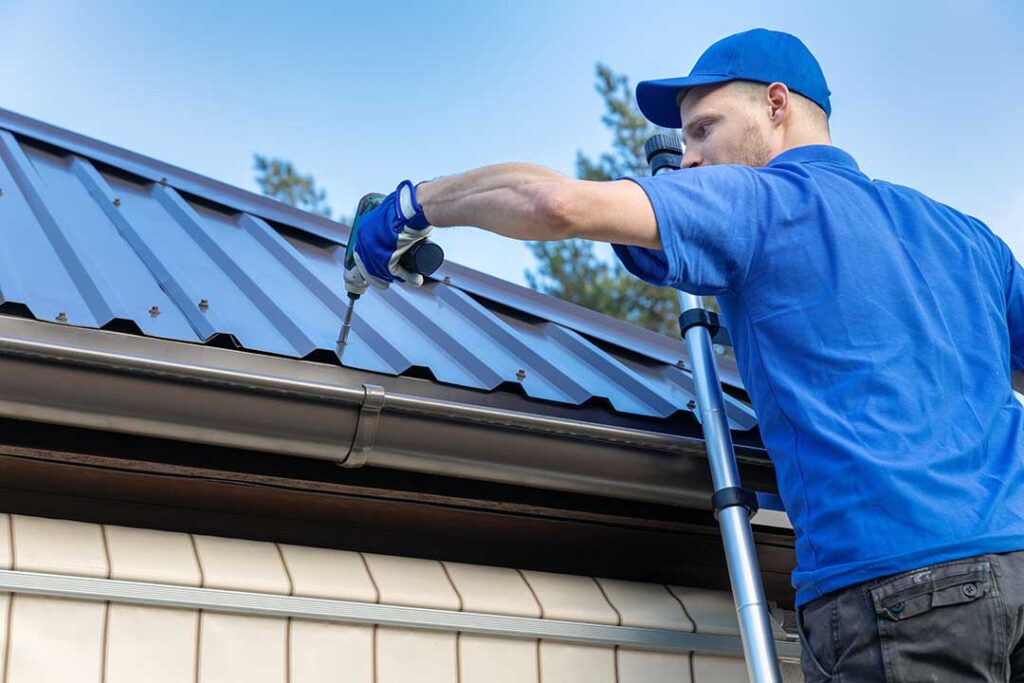
Metal roofing generally tolerates humidity well, but moisture can cause problems at joints, fasteners, cut edges, and areas where different metals meet. Scratches or exposed steel may develop rust if protective coatings are damaged.
Condensation is another concern. A metal roof can become cold quickly, allowing moisture to form on the underside if warm, humid air reaches the roof assembly. Without suitable underlayment, insulation, and air control, dripping condensation may resemble a roof leak.
Metal expansion and contraction can also loosen fasteners or stress sealants over many seasonal cycles. The issue is not humidity alone but the combination of moisture, temperature changes, movement, and installation details.
What happens to wood roof decking?
Wood sheathing is especially vulnerable when moisture remains trapped. Short periods of dampness may dry without lasting harm, but repeated or prolonged wetting can cause swelling, warping, fungal decay, and loss of structural strength.
Warning signs may include:
- Soft or spongy areas underfoot in the attic
- Sagging between rafters or trusses
- Musty odors
- Discoloration around nails or roof penetrations
- Peeling paint or stains on upper-floor ceilings
- Insulation that feels damp or has compressed
A small attic stain does not reveal the full extent of the problem. Water may travel along rafters, insulation, wiring, or roof decking before becoming visible inside the home.
Does humidity affect insulation?
Yes. Damp insulation performs less effectively than dry insulation. Moisture can compress some insulation types, reduce their insulating value, and create conditions favorable to mold or odor problems.
Wet insulation also signals that moisture is entering or condensing somewhere. Simply replacing the insulation without correcting the source may allow the same problem to return.
In cold weather, poor insulation and air leakage can make roof surfaces colder, increasing the chance of condensation. In warm weather, high attic temperatures combined with humidity can place additional stress on roofing materials and ventilation systems.
How do East Rochester seasons influence roof moisture?
Seasonal changes are a major factor. Summers can bring humid air and heavy rain, while autumn leaves may obstruct gutters and slow drainage. Winter adds snow, ice, and repeated freeze-thaw cycles. During spring, melting snow and ice can expose weaknesses in flashing, valleys, gutters, and roof edges.
A roof may appear dry during a visual inspection and still have moisture-related damage beneath the surface. Areas around chimneys, plumbing vents, skylights, valleys, and eaves deserve particular attention because they contain seams or changes in material.
Homes with attached garages, finished attics, older insulation, or limited attic access may have less obvious moisture patterns. Interior humidity levels can also vary depending on ventilation habits, basement conditions, and the number of occupants.
What can homeowners check safely?
Routine observation can identify early warning signs without requiring roof access. From the ground or inside the attic, look for:
- Missing, cracked, lifted, or heavily weathered shingles
- Sagging roof lines or uneven areas
- Rusted flashing or fasteners
- Damp insulation or visible condensation
- Mold-like staining or persistent musty odors
- Gutters that overflow during rain
- Bathroom or kitchen exhaust that ends in the attic
- Ice buildup along roof edges during winter
Avoid walking on a wet, icy, steep, or visibly damaged roof. Structural weakness may not be apparent from the surface. Electrical equipment, mold, unstable attic flooring, and poorly ventilated combustion appliances can also create hazards.
Reducing indoor moisture, using bathroom exhaust fans, keeping gutters clear, maintaining proper attic insulation, and ensuring roof drainage remains open can all help limit humidity-related damage. The goal is not to eliminate moisture completely but to prevent it from becoming trapped inside the roof system.
